

Your heart has a crucial job: circulating blood throughout your body and delivering essential oxygen and nutrients to help all organs function properly. Your heart works alongside your nervous and endocrine systems to regulate your heart rate and blood pressure. With all this in mind, we need to take care of our hearts to ensure they function as intended.
In the United States, heart disease is the leading cause of death for men and women, as one person dies every 34 seconds from it. One in 20 adults over 20 has coronary artery disease, the most common form of heart disease.
Risk factors for heart disease include high blood pressure, high cholesterol, smoking, diabetes, obesity, a nutrition-poor diet, lack of physical activity, and excessive alcohol. The good news is that there are measures we can take to improve our heart health, lowering our risk for developing heart disease.
While not a comprehensive list of all the ways to improve your cardiovascular health, here are 5 ways to improve your heart health.
1. Be Active

Cleveland Clinic found that Americans spend 9.5 hours per day sitting while we work on a computer, play video games, watch TV, and drive, among other activities.
A study from the American College of Cardiology found that those who sit over 10 hours per day with no exercise were at a 40% increased risk for heart failure or other cardiovascular risk.
According to the American Heart Association’s recommendations, adults should get at least 150 minutes per week of moderate-intensity aerobic activity or 75 minutes per week of vigorous aerobic activity. However, it is also recommended to complete some amount of both per week in conjunction with muscle-strengthening activities.
The National Heart, Lung, and Blood Institute recommends regular physical activity to strengthen your heart, improving its ability to pump blood throughout your body. It also decreases your risk for coronary heart disease by lowering blood pressure, managing blood sugar, and reducing the risk of obesity when combined with a nutritious diet.
While 150 minutes per week can sound intimidating, you can break that down to only 30 minutes a day, 5 days a week. Even if you aren’t quite able to reach the target goal every week, making the effort to stay active still has health benefits!
Moderate-intensity aerobic activity includes activity that increases your heart rate by 50-60% from its rate while at rest. Examples of physical activity in this category include:
- Walking or biking
- Dancing
- Gardening
- Pushing a lawnmower
- Household chores (with energy!)
All of these activities can give your body a good workout without overexertion.
For vigorous aerobic activity, these are activities in which your heart rate is higher, and your breathing is faster. Activities in this category include:
- Jogging or running
- Winter hiking with a weighted pack
- Playing basketball
For muscle-strengthening activities, you can perform exercises such as lifting weights or working with resistance bands to cover all the major muscle groups, including legs, hips, back, chest, shoulders, arms, and abdomen.
If you are just starting in your fitness journey, moderate-intensity exercise is a great way to begin. If you have a history of chronic disease, talk with your provider about your intention to increase your physical activity.
Please consult your provider before beginning a new exercise program.
2. Cut Down on Salt

Most people enjoy a salty snack such as chips, and while this is fine in moderation, consuming too much salt (sodium) can have a serious impact on your heart health. Sodium is essential for nerve function and helps to ensure the fluid levels within the body are stable. With too much sodium, it can increase your blood pressure, add stress to your heart, and restrict arteries. Cleveland Clinic notes the daily sodium intake for the average adult should be below 2,300 milligrams per day.
When we talk about reducing salt, it might seem like an obvious solution — put down the salt shaker; however, much of the average American’s sodium intake comes from consuming foods already containing sodium. Read the nutrition labels on the foods you purchase. Items like canned soup or salad dressings contain far more sodium than you may realize. One serving of Campbell’s Chicken Noodle Soup (1/2 cup) contains 890 mg of sodium, nearly half of the daily recommended allowance. Additionally, foods like deli meat can contain high levels of sodium.
One option to consider is following the DASH diet (Dietary Approaches to Stop Hypertension). In this plan, you consume more potassium (a great heart-healthy mineral) and far less sodium. Your primary dietary focus under this diet is to eat heart-healthy foods, such as whole grains, lean meats, fruits, and vegetables. There is no food group eliminated under this diet; however, the portion recommendations for each food group vary from the standard American diet. For more information on the DASH Diet, click here. Consult your provider before beginning a new diet.
Depending on your health history or current conditions, your provider may have different recommendations for you. Please consult your provider for specific recommendations if you have a history of high blood pressure or other health concerns.
3. Incorporate a Variety of Fruits and Vegetables
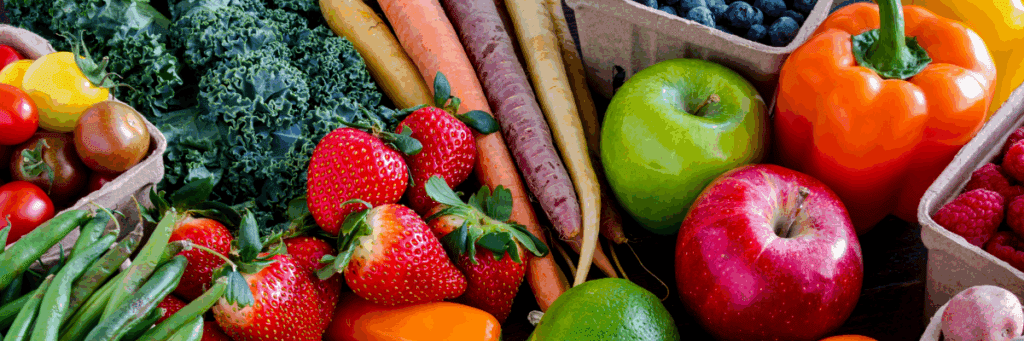
When grocery shopping, it can sometimes feel overwhelming or confusing with the variety of choices available across all products, and knowing what to buy to improve your heart health can feel daunting — but it doesn’t have to be. Most people can see significant benefits from consuming basic fruits and vegetables,
For vegetables, most are packed with potassium, magnesium, Vitamin K, Vitamin C, and more. Potassium balances sodium intake, helping to manage blood pressure. Magnesium, Vitamin K, and Vitamin C all help build a defense for the cells in your body. Vegetables like brussels sprouts, carrots, and broccoli, to name a few, are good sources of fiber, a key nutrient that nearly everyone is severely lacking in their diet.
So much so that the American Society for Nutrition reported that only 7% of adults get enough fiber in their diet. The average woman should aim for 25 grams per day, while the average man should aim for 38 grams. Fiber has quite a few health benefits, including lowering blood sugar and promoting heart health.
For fruits, many are also packed with fiber, including apples, strawberries, pears, and avocado (YES, it is classified as a fruit). Fruits like strawberries, blueberries, blackberries, and raspberries are home to antioxidants, chemicals that fight free radicals that contaminate the body.
Find fruits or vegetables you enjoy, and prepare them in a way that will help you eat them — whether that is raw, steamed, air-fried, or some other way. Fresh fruits and vegetables are preferred over canned and frozen as they do not contain added sodium or sugar; However, canned and frozen fruit and vegetables are better than none at all. While shopping, look for “no sugar added” or “no salt added” on cans or in the freezer section if this is the only or most affordable option for you.
4. Minimize Added Sugars and Overall Sugar Intake

Most of us enjoy a sweet treat from time to time — ice cream, cookies, donuts — but it’s important to understand the impact a high sugar intake has on your heart health. A study cited in the National Library of Medicine notes the impact of sugar and that in higher quantities, it increases the body’s LDL (bad cholesterol) and decreases the body’s HDL (good cholesterol). Beyond this, high blood pressure, obesity, and inflammation are risks, all of which can lead to heart disease.
The American Heart Association recommends that women should consume no more than 6 teaspoons per day of added sugar, while this number is at 9 teaspoons for men. Cutting back on the amount of sugar you consume can seem nearly impossible, but there are ways to make this less challenging.
Sugary drinks like sodas and juices contain a lot of added sugar. One can of Mountain Dew contains 46 grams of sugar (~9 teaspoons). Trendy coffees from your favorite drive-thru can also contain excessive amounts of sugar. Knowing how to read a nutrition label can also help you monitor your sugar intake. Not all nutrition labels will state “sugar” in plain language in the ingredient list, and items such as agave nectar, corn syrup, fructose, etc., are all aliases for sugar.
With this in mind, it’s also important to note the difference between natural sugars and added sugars. Natural sugars are found in many fruits, like strawberries and apples, and consuming these can still be included in a very healthy and well-rounded diet. Added sugars typically come from processed items like coffee creamer, sweetened yogurt, or candy.
When craving something sweet, rather than reaching for an extra-sweetened treat from the cabinet, consider a cup of Greek yogurt with berries.
By scheduling a wellness exam with your DCMH provider, you can be in tune with your LDL and HDL cholesterol levels.
5. Limit Alcohol and Stop Smoking

For alcohol, the American Heart Association has some clear guidelines — if you do not currently drink, do not start. And if you do drink, limit your intake to two alcoholic beverages per day for men and one for women. While some studies suggest an added benefit of red wine consumption on heart health, the American Heart Association states that it does not recommend drinking red wine or any other form of alcohol for any potential health benefit.
Excessive drinking substantially increases your risk for developing cardiovascular conditions, including, but not limited to, high blood pressure, stroke, heart failure, or other diseases. Beyond its negative impact on heart health, excessive alcohol consumption increases your risk of developing numerous other health problems, including liver failure and cancer.
For those with diabetes, high blood pressure, taking certain medications, or with other conditions, alcohol can worsen your symptoms and lead to more complications. Speak with your provider for individualized recommendations.
With smoking, it is imperative to both your heart health and overall well-being to stop. Smoking is a major contributor to cardiovascular disease, damaging cells in the blood vessels as plaque builds and vessels constrict. According to research from the Department of Health and Human Services, smoking increases your risk for developing heart disease or stroke by 2 to 4 times compared to those who do not smoke.
The risk is still present from secondhand smoke exposure. Per data from the Centers for Disease Control and Prevention (CDC), 34,000 deaths from heart disease occur annually from secondhand smoke exposure, and more than 8,000 strokes. For those who do not smoke, but live in a home or work with those who do smoke, their risk for complications of heart disease increases by nearly 30%. The CDC cites that even just 1-2 years after quitting smoking, your risk of a heart attack drops significantly. Therefore, making quitting worth it to potentially save your life.
Quitting smoking can be very difficult, but resources at DCMH are available. If you would like assistance quitting, schedule an appointment with our Ambulatory Pharmacist, Matt Weber, at 812-663-1217.
Your Next Step

If you’re a man over 45 or a woman over 55 and have risk factors like high blood pressure, high cholesterol, or a family history of heart disease, it’s a great idea to consider getting a heart screening at DCMH.
Heart scans can detect early signs of heart and artery diseases, helping prevent serious health issues like heart attacks and strokes. It’s non-invasive and painless — with no discomfort, and the process is quick and easy.
Call 812-663-1157 or visit dcmh.net/heart for more information about the heart scans.
Many DCMH family medicine providers are currently accepting new patients and are eager to welcome you to our family medicine practice. Providers, including Jeffrey Powell, DO; Isaiah Steffen, MD; Scott Washburn, MD; Brianna Daeger, FNP-C; Laura Greiwe, FNP-C; and Kelly Miller, FNP-C have expanded appointment availability and see patients across multiple age groups. Call 812-222-DOCS — we’re ready to help you get started on your path to better health.
The information provided in this health insights article is intended for general informational purposes only and is not a substitute for professional medical advice, diagnosis, or treatment. Always seek the advice of your qualified health provider with any questions you may have regarding a medical condition. Don’t disregard professional medical advice or delay in seeking it because of something you have read in this article.
Sources Cited:
9, J., & Staff, A. (2021, June 9). Most Americans are not getting enough fiber in our diets. American Society for Nutrition. https://nutrition.org/most-americans-are-not-getting-enough-fiber-in-our-diets/
Ajufo, E., Kany, S., Rämö, J. T., Churchill, T. W., Guseh, S., Aragam, K. G., Ellinor, P. T., & Khurshid, S. (2014, August). Accelerometer-Measured Sedentary Behavior and Risk of Future Cardiovascular Disease. Science Direct. https://www.sciencedirect.com/science/article/abs/pii/S0735109724099200
Alcohol use and cardiovascular disease. American Heart Association. (n.d.). https://newsroom.heart.org/facts/alcohol-use-and-cardiovascular-disease
American Heart Association recommendations for physical activity in adults and kids. www.heart.org. (n.d.). https://www.heart.org/en/healthy-living/fitness/fitness-basics/aha-recs-for-physical-activity-in-adults
Centers for Disease Control and Prevention. (n.d.-a). Health effects of cigarettes: Cardiovascular disease. Centers for Disease Control and Prevention. https://www.cdc.gov/tobacco/about/cigarettes-and-cardiovascular-disease.html
Centers for Disease Control and Prevention. (n.d.). Heart disease facts. Centers for Disease Control and Prevention. https://www.cdc.gov/heart-disease/data-research/facts-stats/index.html
Centers for Disease Control and Prevention. (n.d.). What counts as physical activity for adults. Centers for Disease Control and Prevention. https://www.cdc.gov/physical-activity-basics/adding-adults/what-counts.html
Cleveland Clinic. (2020, October 16). How does salt affect heart health? https://health.clevelandclinic.org/how-does-salt-affect-heart-health
Cleveland Clinic. (2021, December 27). Everything you need to know about antioxidants. https://health.clevelandclinic.org/what-do-antioxidants-do
Cleveland Clinic. (2025, May 16). How a sedentary lifestyle impacts your health. https://health.clevelandclinic.org/sedentary-lifestyle
Cleveland Clinic. (2024, January 17). What does “moderate-intensity exercise” mean anyway? https://health.clevelandclinic.org/what-does-moderate-exercise-mean-anyway/
Cleveland Clinic. (2025a, February 11). Cholesterol and sugar: The hidden link. https://health.clevelandclinic.org/is-sugar-bad-for-your-heart
Cleveland Clinic. (2025b, June 18). Dash diet: What it is, meal plans and recipes. https://health.clevelandclinic.org/dash-diet-what-is-it-meal-plans-and-recipes
DiNicolantonio, J. J., Lucan, S. C., & O’Keefe, J. H. (2016). The evidence for saturated fat and for sugar related to coronary heart disease. Progress in cardiovascular diseases. https://pmc.ncbi.nlm.nih.gov/articles/PMC4856550/
Gunnars, K. (2025, April 22). 22 high fiber foods you should eat. Healthline. https://www.healthline.com/nutrition/22-high-fiber-foods
Increase the proportion of adults who do enough aerobic and muscle-strengthening activity – PA‑05 infographic. Increase the proportion of adults who do enough aerobic and muscle-strengthening activity – infographic – Healthy People 2030. (n.d.). https://odphp.health.gov/healthypeople/objectives-and-data/browse-objectives/physical-activity/increase-proportion-adults-who-do-enough-aerobic-and-muscle-strengthening-activity-pa-05/infographic?year=2022
Mayo Foundation for Medical Education and Research. (2024a, April 10). Cardiovascular Wellness with heart-healthy vegetables. Mayo Clinic. https://mcpress.mayoclinic.org/healthy-heart/best-vegetables-for-heart-health/?cjdata=MXxOfDB8WXww&cjevent=7e1f5e52d9c711f083b102180a82b838&cm_mmc=CJ-_-100357191-_-5250933-_-Evergreen%2BLink%2Bfor%2BMayo%2BClinic%2BDiet&utm_source=cj&utm_content=100357191&utm_capaign=3-months
Mayo Foundation for Medical Education and Research. (2024, April 10). Cardiovascular Wellness with heart-healthy vegetables. Mayo Clinic. https://mcpress.mayoclinic.org/healthy-heart/best-vegetables-for-heart-health/?cjdata=MXxOfDB8WXww&cjevent=7e1f5e52d9c711f083b102180a82b838&cm_mmc=CJ-_-100357191-_-5250933-_-Evergreen%2BLink%2Bfor%2BMayo%2BClinic%2BDiet&utm_source=cj&utm_content=100357191&utm_capaign=3-months
U.S. Department of Health and Human Services. (n.d.). Benefits. National Heart Lung and Blood Institute. https://www.nhlbi.nih.gov/health/heart/physical-activity/benefits